Mouse is very beautiful

Not copy

Tuesday, November 8, 2011

Removes the digital pen mouse


Removes the digital pen mouse


Imagine that you are able to transfer a digital file or a note from one computer to another more easily than the conventional, and if you give the other computer files and paper or a note in his hand
The researchers believe computer science laboratories Sony Corporation in Tokyo, they were able to reach this technique

Despite the proliferation of computers and mobile phones today are everywhere and easy access to a lot of information, but it is still difficult for two people in one room that Inskha files or notes between Jhazehma without the use of traditional methods of file sharing in terms of the use of e-mail or cylinders

However, Dr. John and his team Rakimoto laboratory Sony faced these challenges and eventually managed to provide new research to a conference in Vienna on how to interact with the computer

And Dr. Rakimoto and his team developed a new technique called "pick-Land routes" means the capture file from the computer and put it on another computer using a special type of pen
It is known that the technique of "End rider paths," which means the computer mouse drag the file and place it in another place on the same computer is a technique used in most computer programs

According to the new technology can be to the owner of a laptop computer to pick a file using this pen, and drop the file on another computer screen by placing the pen on the screen

This technique also allows the user to select files and move them from PC to another without having to use the networks or servers
It will make the technology "Peak End Drop" easy on the two meeting in the exchange of files on the handheld calculate, and then the exchange of information, websites, music files, etc.
The researchers also developed another technology called "pick-Land Pim" and aims to capture files from a computer and put it on the display screen using a special pen also
It can then drag files from the desktop to the laptop and put it on display
Dr Ian McClelland, a senior adviser Philippe Digital Systems Laboratory in the Netherlands: "These techniques are very good at interacting with the computer

He added that the importance of reaching more of these techniques should take the same path of development of a computer mouse invented by Doug Engelbart in the sixties
Technology has been developed, "Beck Land routes" using a pen computer screen Mitsubishi and sensitive type and the 300 my Wacom
And enjoy this pen a unique code number reads the computer when approaching the pen of screen, and then appears under the transferred file on the computer screen

Despite the dazzle all those present at the conference which provided the new technology but that Dr. Bill Rozhel from the School of Computer Science at the University of Birmingham in Britain, described the new technology as a "child's play," pointing out that it lacks the theoretical development

Sony Ericsson Xperia Play Review


Sony Ericsson Xperia Play Review


SONY Ericsson's Xperia Play is an Android smartphone with the power to play PlayStation games. This feature alone should make it tempting to gamers who are looking to get some game time while on the move.

The Play looks like any other Android phone although it is a fair bit chunkier but still not too big that it won't fit in your pants pocket comfortably.

The exterior of the phone is made of plastic which keeps it lightweight at only 175g. However, the plastic also gives it a cheap and flimsy feel.

Its 4in touchscreen is sharp and vibrant which is great for games but there is a slight colour shift when viewed from the sides. Another downside is that the screen is highly reflective, making it difficult to see it clearly when outdoors.


Camera


The 5.1-megapixel camera isn't remarkable. The image quality is serviceable at best and the LED flash has a limited range. You can't do much to improve image quality other than tweak basic settings like exposure and white balance.

But what's more disappointing is the lack of HD video recording which is a standard feature in most smartphones. VGA quality videos would have been acceptable a few years back but they look and sound terrible by today's standards.

Much to our surprise the built-in speakers weren't half bad and were loud enough to be heard in a noisy and crowded room.

Sony Ericsson didn't overhaul the stock Android 2.3 interface like other phone makers and instead has chosen to add only minor touches of its own like Timescape and Play widget. Timescape gathers social network feeds and text messages, and displays them in an easy-to-read format on the ­homescreen.

The Play relies on a single-core 1Ghz Qualcomm Snapdragon ­processor, 512MB RAM and an Adreno 205 graphics chip for ­muscle.

The phone was generally ­responsive and surfing the Net with the default Android web browser felt smooth. The browser supports Flash but visiting sites that uses it a lot can slow the phone to a crawl.

We tried playing several games on the Flash gaming site Kongregate but the results were mixed - some ran smoothly while others chugged along.

The phone's default on-screen keyboard is unresponsive - letters appear half-a-second after typing. Also, the spacing between letters is too close which makes it harder to hit the correct letters. In the end we had to install a keyboard app to replace it.

The Play's battery was decent for a smartphone that has to do double duty as a PlayStation gaming device. Sony Ericsson claims that the ­battery can last up to five hours and it's true - we managed to use it an entire day and that included playing games on it. However, bear in mind that if you have too many games running in the background, the ­battery will drain faster.

Serious about gaming


The Play is designed for gaming on the go - tucked underneath the screen is a slide-out controller which has a D-pad, four PlayStation buttons, a pair of digital ­analogue pads at the centre, and two ­shoulder buttons on the sides.


The controller worked pretty well and is a welcome change from using on-screen controls on devices with touchscreen like the iPad .

The Play comes preloaded with several games including Crash Bandicoot, a PlayStation classic. Although the game looks dated by modern standards, it'll still brought back good memories for us.

The game runs at a very smooth frame rate and works well on the Play's gamepad. One feature that we found ­useful is that the Play automatically suspends the game whenever we switched to a different task. So, you can take a call or respond to an e-mail and still continue your game right where you left off.

The Play also comes with a few Android games such as FIFA 10, Star Battalion and Bruce Lee: Dragon Warrior which are not exclusive to the phone and some don't take advantage of the ­gamepad controls.

Unfortunately, you are pretty much stuck with just one PlayStation game at the moment because the PlayStation Pocket store for ­downloading games is still not available here yet. Considering this is the first PlayStation certified game, it's quite a bummer that you can't get more games.


Conclusion


Sony Ericsson's Xperia Play isn't quite the ground breaking mobile gaming device that we hoped it would be although the slide-out controller is far better for playing games than a ­touchscreen.

The audio from the ­speakers is also surprisingly good and helps keep you immersed in the game.

Also, the phone's hardware is powerful enough for general use and web browsing although it can slow down a bit when handling Flash.

The biggest letdown is that the PlayStation store has yet to be open here and until it does you will not be able to enjoy using the Play fully and will be stuck with one PlayStation game.

It's too bad that Sony Ericsson rushed the Play out of the door without making sure that its store was up and running.

Hopefully, the problem will be rectified soon.

As it stands, the Play is a mixed bag of goods - it's a decent ­smartphone with a great gamepad but there aren't many games to take advantage of it yet.

Casual gamers will be ­satisfied with playing Android games but hardcore gamers are better off ­waiting for the store to open before giving the Xperia Play a shot. Also, the PlayStation Vita is expected to be released by the end of the year and it is a superior handheld ­gaming system.

Pros: Comes with six games; ­supports Flash games; gamepad works well; decent and loud ­speakers; runs Android 2.3.

Cons: Can't download PlayStation games; screen is ­difficult to view outdoors; default keyboard is a pain to use; no HD video recording; some games don't fully utilise the gamepad.


Sony Ericsson Xperia Play

NETWORK: GSM 850/900/1800/1900, HSDPA 900/2100
OPERATING SYSTEM: Android 2.3 (Gingerbread)
DISPLAY: 4in FWVGA (480 x 854-pixels) touchscreen
CAMERA: 5.1-megapixels with autofocus, LED flash (rear), VGA camera (front)
CONNECTIVITY: Bluetooth, WiFi, micro USB
MEMORY: 400MB internal storage
EXPANSION SLOT: MicroSD (expandable up to 32GB)
STANDBY/TALK TIME:425 hours/8 hours 25 minutes
OTHER FEATURES: DLNA certified, supports PlayStation and Android games, Timescape, digital compass, A-GPS
DIMENSIONS (W x D x H): 62 x 16 x 119mm
WEIGHT: 175g

Samsung Galaxy S II Review


Samsung Galaxy S II Review


At a glance:
+ Speedy
+ Slim and light
+ Superb screen
- Overheating issues caused by intensive processing

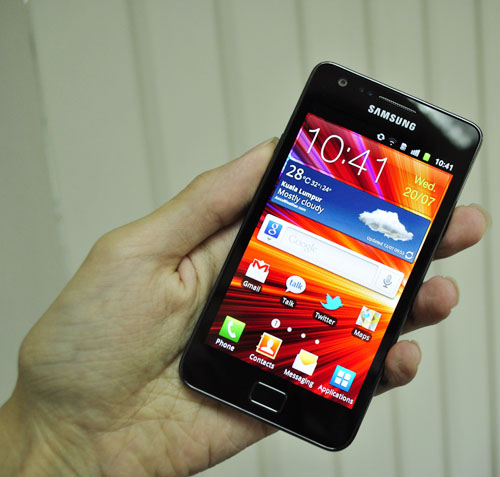
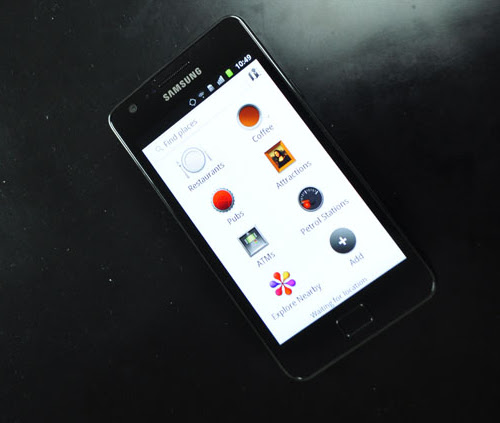
18 July 2011 – The Samsung Galaxy S II is currently the world’s best selling Android smartphone, a title bestowed to its predecessor as well. It is not difficult to see why this device is so highly sought-after, as it integrates the best things you could ever want from a smartphone.

In the box:
microUSB cable
Charger set
Headset

Exterior, Controls and Screen

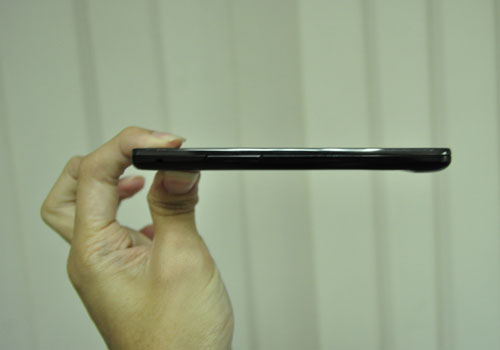
The Samsung Galaxy S II is so slim that it should be illegal – at 125.3 x 66.1 x 8.5mm, it is currently the thinnest smartphone available right now. Unsurprisingly, at a near weightless 116 grams, the Samsung Galaxy S II is also among the lightest out there.


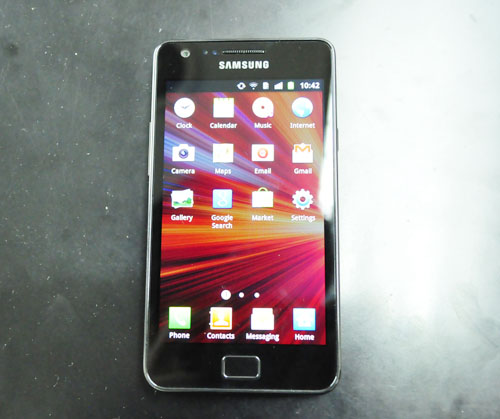
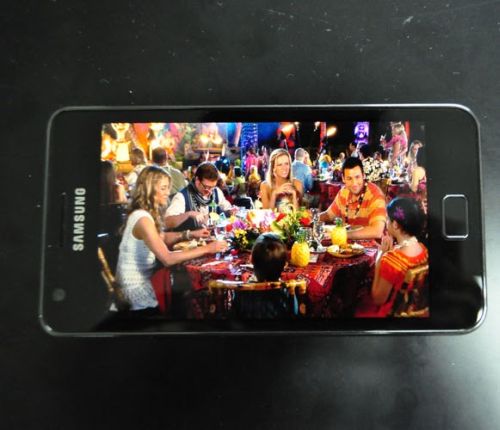
A 4.3-inch, 480 x 800 pixel display on the Samsung Galaxy S II is impossible to miss, and as soon as you turn the device on, you will be treated to a visual spectacle unlike any other. The Gorilla Glass reinforced screen with Samsung’s patented Super AMOLED Plus technology renders every detail and colour to the most minute level.


Samsung went with the minimalist approach when designing this device, evident with a single Home key that adorns the bottom of the screen. It is however, sandwiched in between the touch-sensitive Menu and Back buttons. Then there are the volume control and power buttons, which oppose each other at the sides of the device.


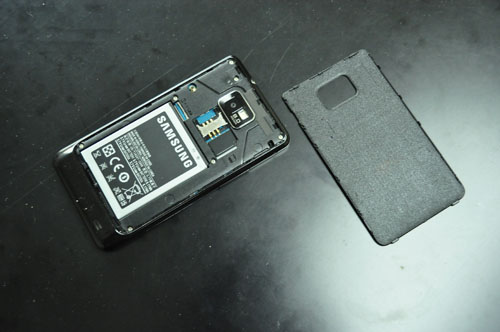
The 1650mAh battery should last users roughly a day of moderate to heavy usage, though you could probably push that limit to about two days if you are conservative enough.

Features


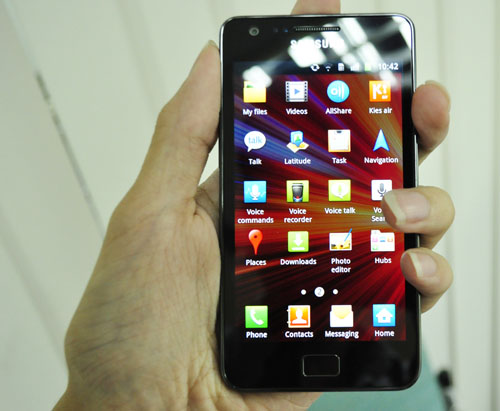
As you would have come to expect, the Samsung Galaxy S II is shipped with just about everything up to date. Out of the box, it runs on a previously new version of Gingerbread, Android 2.3.3, which you can now upgrade to 2.3.4. The Samsung Galaxy S II also boasts an overhauled TouchWiz 4.0 user interface.

How does this translate to usage experience, you ask? One word - Glorious. The Samsung Galaxy S II’s dual-core 1.2GHz Orion processor handles just about anything you can throw at it with absolutely no signs of being bogged down. Diving in and out of homescreens while opening multiple applications simultaneously proved to be a mere stroll in the park for the engine powering this vehicle of technology. 

With so much screen real estate at your disposal, users can stuff in widgets and shortcuts for easy access, and we absolutely like how everything can be resized accordingly to increase or decrease functionality. Given how intuitive the controls are, having seven homescreens at your disposal to tinker with is a godsend. If that prove insufficient, the built-in folders should help store whatever applications you may have obtained as a result of a download spree.

What you have in your hands at the end of the day is an interface that will, at first, seem a little complicated with all its contextual menus, pinches, zooms and dragging. But if you allow yourself some time to bond with the Samsung Galaxy S II, you will soon be awed by this beast of a device. Power consumption aside, one drawback is how easily the Samsung Galaxy S II heats up when you run some of the more intensive applications.
Camera, Video and Audio


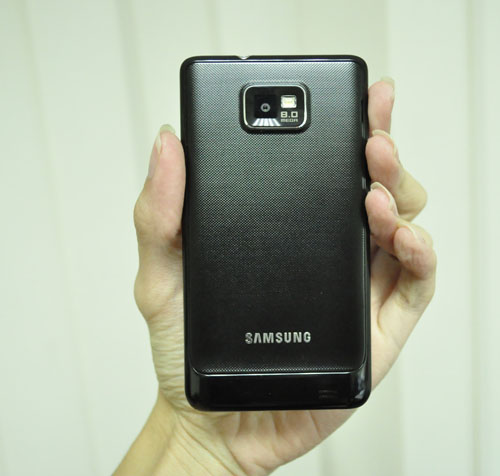
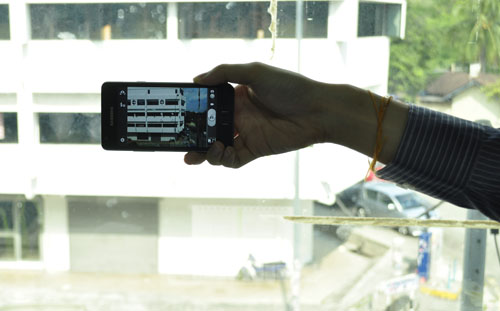
The Samsung Galaxy S II’s 8-megapixel shooter does a commendable job at doing what it was designed for – producing really good pictures with sacrificing too much of the trimmings. The quality is not on par with say, the Nokia N8, but is certainly leaps and bounds better than offerings on most smartphones on the market right now.


Incidentally, it also does 1080p video recording at 30fps, which again, is not at the level of commercial products, but is better than what other smartphones are capable of right now.

When you have a screen this large, one of the most obvious things you would want to do is to play videos on it, and boy, has Samsung really gone all out this time around. The Samsung Galaxy S II now has its own video player that comes with functions that is designed to enhance your experience, such as a screen lock that allows you to watch your movies uninterrupted. Its range of supported files is also very extensive, so you need not really have to worry as to what formats your video are.

The speakers on the Samsung Galaxy S II on the other hand could have been better, but when you plug in a good pair of earphones, it performs rather well. The built-in music player comes with functionalities such as equalizers, as well as a Smart Playlist which remembers all your most-played tracks and places them as favourites for future listenings.
Connectivity


As a high-end device, the Samsung Galaxy S II includes every connectivity feature you can think of, so there is no real need in mentioning them. It would be however, worthwhile to note that the microUSB port also acts as an HDMI out, allowing you to connect your Samsung Galaxy S II to your television.

Verdict

We are hard pressed to find anything wrong with the Samsung Galaxy S II, because it is as flawless as a smartphone can get. It may be a little pricey for some, but if you do decide to plop down the cash for this, you are assured of the fact that you are getting the best Android smartphone on the market that money can buy. Even as time goes on, its high specifications would mean that it borders on being future-proof, so you will be sticking to this for quite some time to come.

HTC Salsa Review


HTC Salsa Review

HTC Salsa Review

THE word Salsa brings to mind something that is fun and exciting and in some ways, HTC's latest mid-range Android phone of the same name, wants to embody those exact qualities.

The HTC Salsa together with its sibling the ChaCha, are a new breed of HTC phones that capitalise on social networking integration with a built-in Facebook function.

On the outside, it is an elegantly designed phone with a sleek metallic casing and a build quality that is on par with higher-end phones like the HTC Desire S. It also feels remarkably light and comfortable in the hand.


HTC Salsa Review


It actually bears close resemblance to the last year's HTC Legend. In fact, the two look almost identical save for the fact that the Salsa has a slightly larger 3.4in screen.

The screen quality is one area that the phone is lacking. Though the HVGA resolution (320 x 480-pixels) has good contrast and decent viewing angles, the screen's low resolution makes text on full webpages appear small and unreadable.

This means you will need to zoom in and out a lot when browsing pages on the Web. We liked how there's a proper camera button on the Salsa as it is something that we rarely see on smartphones these days. You can even do a half press to pre-focus and snap a picture by fully pressing down.

There isn't much to see around the back except for the Salsa's 5-megapixel camera and speakers. Everything else is where you would expect them to be - the 3.5mm headphone jack at the top while the volume rocker and microUSB port can be found on the left side of smartphone.

HTC Salsa Review 


The Salsa's performance is generally fluid for most regular tasks thanks to its 800MHz Qualcomm processor. However, it is not well suited for running processor-intensive games - less demanding games such as Angry Birds run fine on the device.

Another downside is that the browser does not support Flash, so you will miss out on watching certain Flash videos and playing Flash games from Kongregate on your mobile.

Running on Android 2.3.3, the Salsa comes with the usual HTC Sense interface that is overlaid on top of the default operating system. For the most part the Sense interface feels similar to other HTC phones but there's a new interactive lock screen that you can use to access commonly used apps like the Phone, Messages, Camera and Mail.

All you have to do is drag one of the icons into the circle to instantly open the app so you can read your messages, make a call or snap a picture right away. It is a simple yet effective feature that greatly improves the phone's usabilty.

The default browser handles tabbed browsing in a unique way. Just pinch the screen and a scrolling icon list of opened webpages comes up, similar to how it appears on your desktop browser.

It's not perfect though, as the zoomed out view responds slower when pages are being loaded.

The Salsa's battery performance did not impress us. Considering that this a social networking phone that needs to be constantly updated it was rather disappointing.

After using the phone to check on our Facebook updates, browse the Web, post pictures and make the occasional call, we found that the phone could just barely get through the day on a single charge.


What makes the Salsa different from your run-of-the-mill Android phone is its Facebook integration. It has a dedicated Facebook button that streamlines the processing of posting content directly to your Facebook wall.

The feature works across multiple applications so when you take a photo for instance, the button will glow to indicate that you can upload it to Facebook.

Similarly you can use the button to share links viewed on your web browser, share videos and tell everyone what music you're currently listening to.

By "long pressing" on the button, you can check in at your current location via Facebook Places. You can also instant message your Facebook contacts using the included FB Chat app on the phone.

Additionally there's a ticker at the bottom of the clock application on the home screen showing you the latest Facebook updates.

Though it only shows a single update, you can click on it to take you to HTC's new Sense Facebook interface. Here you can get a full view of all Facebook updates from your friends and even sort them by links, check-ins, videos or photos shared.

While it is a nice app to have to sort through your friend's updates, it does seem redundant against the existing Facebook app that you can get off the Android Marketplace.

You're not limited to just Facebook though, as you can also get updates from other social networks Twitter and Flickr on the Salsa.


Not great for pictures


The Salsa's 5-megapixel camera is good for taking casual pictures, or the occasional video, to upload on Facebook.

However the camera isn't the best that we've seen - the picture quality is passable at the very least and only performs well when shooting outdoors. Shutter lag is quite significant on the camera so it is next to impossible to capture moving subjects on it.

The LED flash does help when snapping pictures in the dark though the results often come off as being too artificial or washed out by the flash.

The video quality of the camera isn't anything to shout about. In an age where HD video capture is increasingly common, the Salsa's VGA quality recordings look sadly outdated. You can also shoot in widescreen (720 x 480-pixels) but there's not much difference in terms of quality.

Still, the camera is good for taking close-up shots and the quality is acceptable for uploading to Facebook.

Speaking of which, since this is a Facebook-centric phone after all, the Salsa has a useful auto upload feature that can be set to upload pictures directly to your Facebook account after they are taken.

It's cool feature to have if you want to immediately share your pictures with your friends. However, it indiscriminately uploads anything you record or snap, so be sure to switch it off to avoid uploading embarrassing pictures by accident or using up all your mobile data for the month.


Conclusion


As a social network orientated phone, the HTC Salsa has got some things right, like having a dedicated Facebook button to make it easier to share your thoughts, links, pictures and videos with your friends.

Furthermore, the new interactive lock-screen is very useful for accessing frequently-used apps, and web browsing feels good thanks to the improved handling of tabbed browsing.

The phone does, however, have a couple of low points - the camera is poor and its weak processor makes it underpowered for playing games or run processor-intensive apps.

All in all, if you are just looking for a smartphone that specialises in social networking and has integrated Facebook functions, then the HTC Salsa might be right up your alley.

Pros: Sleek design; Facebook integration; tabbed browsing; interactive lock-screen.

Cons: Low resolution screen; poor camera; weak processor; no Flash support; unimpressive battery life.


HTC SALSA

Social networking smartphone
NETWORK: GSM 850/900/1800/1900, HSPA 900/2100
OPERATING SYSTEM: Android 2.3.3 (Gingerbread)
DISPLAY: 3.4in capacitive multi-touch screen (320 x 480-pixels)
CAMERA: 5-megapixels autofocus; LED flash; VGA video recording; VGA front camera
CONNECTIVITY: Bluetooth 3.0, WiFi 802.1, micro USB
MEMORY: 512MB RAM; 512MB internal phone storage
EXPANSION SLOT: microSD, up to 32GB
STANDBY/TALK TIME: 530 hours/ 7 hours 50mins
OTHER FEATURES: Facebook integration, interactive lock-screen
DIMENSIONS (W X D X H): 109.1 x 58.9 x 12.3mm
WEIGHT: 120g

Related Posts Plugin for WordPress, Blogger...