Mouse is very beautiful

Not copy

Showing posts with label HTC Mobiles. Show all posts

Tuesday, November 8, 2011

HTC Salsa Review


HTC Salsa Review

HTC Salsa Review

THE word Salsa brings to mind something that is fun and exciting and in some ways, HTC's latest mid-range Android phone of the same name, wants to embody those exact qualities.

The HTC Salsa together with its sibling the ChaCha, are a new breed of HTC phones that capitalise on social networking integration with a built-in Facebook function.

On the outside, it is an elegantly designed phone with a sleek metallic casing and a build quality that is on par with higher-end phones like the HTC Desire S. It also feels remarkably light and comfortable in the hand.


HTC Salsa Review


It actually bears close resemblance to the last year's HTC Legend. In fact, the two look almost identical save for the fact that the Salsa has a slightly larger 3.4in screen.

The screen quality is one area that the phone is lacking. Though the HVGA resolution (320 x 480-pixels) has good contrast and decent viewing angles, the screen's low resolution makes text on full webpages appear small and unreadable.

This means you will need to zoom in and out a lot when browsing pages on the Web. We liked how there's a proper camera button on the Salsa as it is something that we rarely see on smartphones these days. You can even do a half press to pre-focus and snap a picture by fully pressing down.

There isn't much to see around the back except for the Salsa's 5-megapixel camera and speakers. Everything else is where you would expect them to be - the 3.5mm headphone jack at the top while the volume rocker and microUSB port can be found on the left side of smartphone.

HTC Salsa Review 


The Salsa's performance is generally fluid for most regular tasks thanks to its 800MHz Qualcomm processor. However, it is not well suited for running processor-intensive games - less demanding games such as Angry Birds run fine on the device.

Another downside is that the browser does not support Flash, so you will miss out on watching certain Flash videos and playing Flash games from Kongregate on your mobile.

Running on Android 2.3.3, the Salsa comes with the usual HTC Sense interface that is overlaid on top of the default operating system. For the most part the Sense interface feels similar to other HTC phones but there's a new interactive lock screen that you can use to access commonly used apps like the Phone, Messages, Camera and Mail.

All you have to do is drag one of the icons into the circle to instantly open the app so you can read your messages, make a call or snap a picture right away. It is a simple yet effective feature that greatly improves the phone's usabilty.

The default browser handles tabbed browsing in a unique way. Just pinch the screen and a scrolling icon list of opened webpages comes up, similar to how it appears on your desktop browser.

It's not perfect though, as the zoomed out view responds slower when pages are being loaded.

The Salsa's battery performance did not impress us. Considering that this a social networking phone that needs to be constantly updated it was rather disappointing.

After using the phone to check on our Facebook updates, browse the Web, post pictures and make the occasional call, we found that the phone could just barely get through the day on a single charge.


What makes the Salsa different from your run-of-the-mill Android phone is its Facebook integration. It has a dedicated Facebook button that streamlines the processing of posting content directly to your Facebook wall.

The feature works across multiple applications so when you take a photo for instance, the button will glow to indicate that you can upload it to Facebook.

Similarly you can use the button to share links viewed on your web browser, share videos and tell everyone what music you're currently listening to.

By "long pressing" on the button, you can check in at your current location via Facebook Places. You can also instant message your Facebook contacts using the included FB Chat app on the phone.

Additionally there's a ticker at the bottom of the clock application on the home screen showing you the latest Facebook updates.

Though it only shows a single update, you can click on it to take you to HTC's new Sense Facebook interface. Here you can get a full view of all Facebook updates from your friends and even sort them by links, check-ins, videos or photos shared.

While it is a nice app to have to sort through your friend's updates, it does seem redundant against the existing Facebook app that you can get off the Android Marketplace.

You're not limited to just Facebook though, as you can also get updates from other social networks Twitter and Flickr on the Salsa.


Not great for pictures


The Salsa's 5-megapixel camera is good for taking casual pictures, or the occasional video, to upload on Facebook.

However the camera isn't the best that we've seen - the picture quality is passable at the very least and only performs well when shooting outdoors. Shutter lag is quite significant on the camera so it is next to impossible to capture moving subjects on it.

The LED flash does help when snapping pictures in the dark though the results often come off as being too artificial or washed out by the flash.

The video quality of the camera isn't anything to shout about. In an age where HD video capture is increasingly common, the Salsa's VGA quality recordings look sadly outdated. You can also shoot in widescreen (720 x 480-pixels) but there's not much difference in terms of quality.

Still, the camera is good for taking close-up shots and the quality is acceptable for uploading to Facebook.

Speaking of which, since this is a Facebook-centric phone after all, the Salsa has a useful auto upload feature that can be set to upload pictures directly to your Facebook account after they are taken.

It's cool feature to have if you want to immediately share your pictures with your friends. However, it indiscriminately uploads anything you record or snap, so be sure to switch it off to avoid uploading embarrassing pictures by accident or using up all your mobile data for the month.


Conclusion


As a social network orientated phone, the HTC Salsa has got some things right, like having a dedicated Facebook button to make it easier to share your thoughts, links, pictures and videos with your friends.

Furthermore, the new interactive lock-screen is very useful for accessing frequently-used apps, and web browsing feels good thanks to the improved handling of tabbed browsing.

The phone does, however, have a couple of low points - the camera is poor and its weak processor makes it underpowered for playing games or run processor-intensive apps.

All in all, if you are just looking for a smartphone that specialises in social networking and has integrated Facebook functions, then the HTC Salsa might be right up your alley.

Pros: Sleek design; Facebook integration; tabbed browsing; interactive lock-screen.

Cons: Low resolution screen; poor camera; weak processor; no Flash support; unimpressive battery life.


HTC SALSA

Social networking smartphone
NETWORK: GSM 850/900/1800/1900, HSPA 900/2100
OPERATING SYSTEM: Android 2.3.3 (Gingerbread)
DISPLAY: 3.4in capacitive multi-touch screen (320 x 480-pixels)
CAMERA: 5-megapixels autofocus; LED flash; VGA video recording; VGA front camera
CONNECTIVITY: Bluetooth 3.0, WiFi 802.1, micro USB
MEMORY: 512MB RAM; 512MB internal phone storage
EXPANSION SLOT: microSD, up to 32GB
STANDBY/TALK TIME: 530 hours/ 7 hours 50mins
OTHER FEATURES: Facebook integration, interactive lock-screen
DIMENSIONS (W X D X H): 109.1 x 58.9 x 12.3mm
WEIGHT: 120g

HTC EVO 3D Review


HTC EVO 3D Review


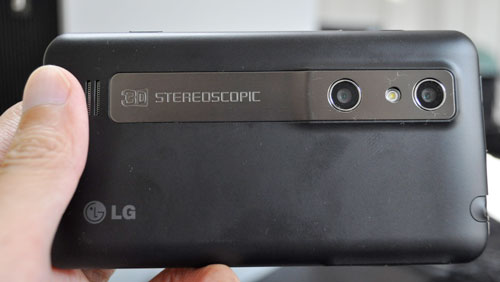
The LG Optimus 3D is the first in a new niche segment of 3D phones. Another of which is the HTC Evo 3D, also launched at the same time and directly competing with the LG Optimus 3D.


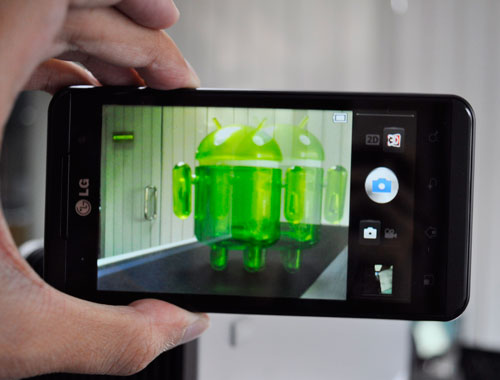
These two 3D phones are Android devices, and they work just like any other Android device in its class, save for the fact that there is a small subsection which allows you to access 3D content such as photos, videos and games. Of course, with 3D content being a fairly new category, you would have to create much of the 3D content yourself.
The LG Optimus 3D has a dual-core processor, a Texas Instruments OMAP 4 running at 1 GHz. It is using the slightly outdated Android 2.2 (Froyo) in a time when most other devices are announced with Android 2.3 (Gingerbread).

In the box
Transceiver unit
1 standard battery
Charger set
Headset
Manuals
Exterior, Controls and Screen

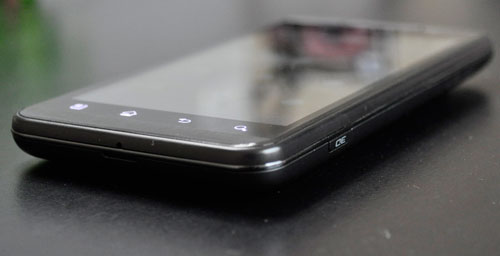
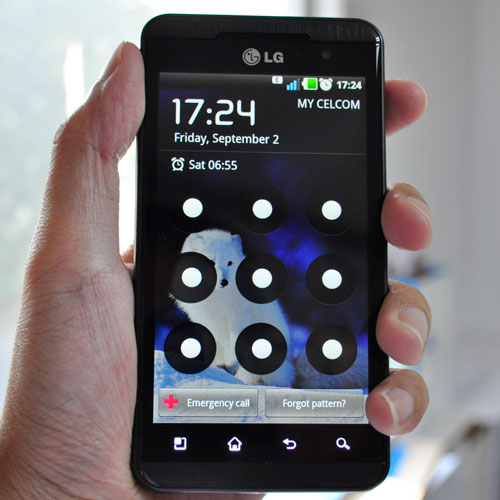
The LG Optimus 3D is indeed a humongous device. At least for this day and age, it outweighs and outsizes competing devices. That is what you get to carry around in return for a huge 4.3-inch screen that is great for watching videos and for fitting in lots of widgets on the homescreens.


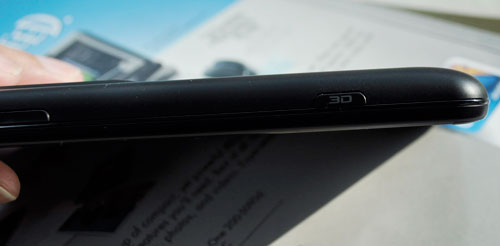
There are four haptic-response buttons across the bottom of the screen. There is also a 3D button and the volume toggle on the right side of the phone. Everything else must work from with the OS interface itself. However, said haptic-response buttons light up once when the screen is unlocked, and do not light up again until they are pressed. That is to say that you will have to remember where each haptic-response button is located, or else it will be very much a game of “Surprise, you have got the wrong button!”


The 4.3-inch screen is a huge one, the largest yet for an LG phone. The data/charging port is on the left edge of the phone, together with the HDMI port that mirrors the display of your phone on a compatible large-screen display.
The 480 x 800 pixel resolution comes up a little short for a 4.3-inch display. It did not affect the usage of the device very much, but a little more effort was expected from LG for a premium device with a premium price such as this one.


Software, Applications and Games

As we mentioned earlier, the LG Optimus 3D comes with an outdated OS, although not by very much. Android 2.2 (Froyo) is still fairly decent but the latest Android 2.3 (Gingerbread) would have been a great plus point for the LG Optimus 3D.
The upside of this is that the tuning of the Android 2.2 OS to the hardware is done fairly well. Apart from the occasional system freeze, the LG Optimus 3D was fairly reliable for the most part.
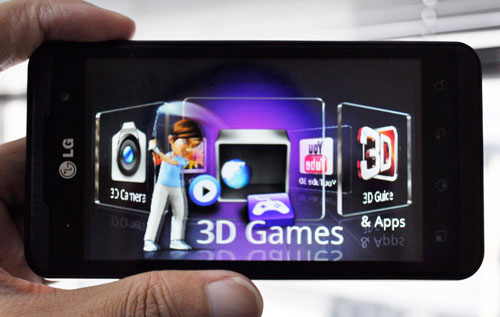
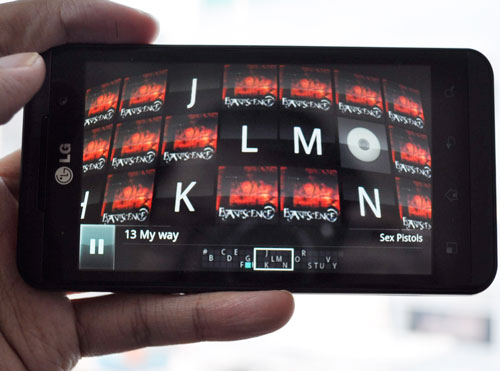
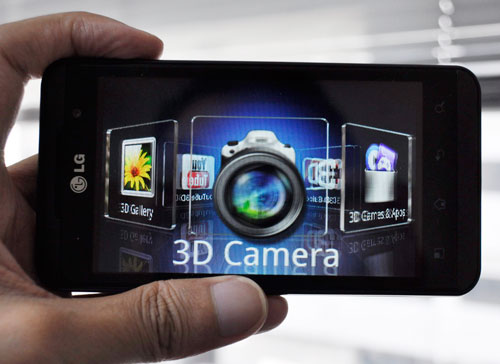
Thank goodness that LG decided to take out the large amount of bloatware that we found on the Optimus Black. This one was a lot better. The top half of the menu is for 3D-related applications. Next comes the main menu with the built-in applications. Anything else you install will show up in a separate section at the bottom of the entire menu section.
The usual PIM services of Clock, Notes and Calendar supplement a Polaris Office Suite that tried to go to some website and download something. Being a Google phone, Youtube, Facebook and Gmail shortcuts were all there. So is a GPS application.


There are three 3D games in the phone. Actually, they are all placeholders and require downloading the actual game files from an Internet connection. The games are Let’s Golf, 2, Asphalt 6 and Nova and the first two require something like an additional 700MBs of data before it will work. There is also a Gulliver’s Travels picture book that will have to do for the 3D demonstration until you get that large amount of data downloaded for the games.
We were told to go get our 3D fix on LG world. LG World is a website that supposedly supports a lot of 3D content, primarily for LG phones. At the time of writing, the LG World website was a poor experience. Navigation was difficult and the site was slow. Let’s see some improvement there before I can recommend buying a 3D phone.


The storage is fairly decent. Apparently, 1 GB is allocated to applications. Another 7 GB is for all the 3D junk that you will be filling the phone with. Slot in a 32 GB microSD card and you will have something like 40GBs at your disposal. There was a time not too long ago when laptops only came with 40GB drives.

Camera, Video and Audio


The main camera on the LG Optimus 3D is 5-megapixels, just like with the LG Optimus Black. Unlike the LG Optimus Black, this time around LG does not say how much the front-facing camera is rated. But it does not look like the LG Optimus 3D has outdone the 2-megapixel rating given to the front-facing camera of the LG Optimus Black.


The video playback and recording is something of note, particularly because this is a 3D phone. Supposedly, the 3D video records at 720p. This is also what is claimed by the HTC Evo 3D. However, there were some allegations of over-estimation by both manufacturers. To put it in simple terms, the manufacturers’ method of calculating 720p for the 3D video did not agree with another method of calculation. We can tell you that either method will give you a headache from staring at the screen for too long.
The video playback was fairly good. The device played back a few MP4 files without complaining. The volume was a little too soft but using earphones solved the problem and gave you a much better surround sound effect anyway.
Internet Connectivity

This is a HSDPA 14.4 Mbps device. It also supports Wi-Fi 802.11 b/g/n, tri-band UMTS / 3G and quad-band GSM. Bluetooth 3.0 is supported and the microUSB plugs into a computer and auto-syncs your data if you want it to, just like any other Google Android device.
Editor’s Opinion

The LG Optimus 3D impresses very much. There has been very little change in the world of handsets over the last five years or so. True, the cameras get better, the processors get faster and the storage capability increases. But there has been precious little to excite one who plays with such toys every day for a living.
The innovative 3D section of the phone was a breath of fresh air. It was really long overdue. Although the 3D is only a small part of the phone and its contents come under the 3D category, the end result was still a lot better than what I first thought when reading about a 3D phone.
It is quite a leap when you consider that the next step in video technology for phones might well be the holographic projector used in Star Wars movies.

HTC Sensation XE With Beats Audio Priced At RM 1999 In Malaysia


HTC Sensation XE With Beats Audio Priced At RM 1999 In Malaysia


HTC has announced that the Sensation XE with Beats Audio is now available in Malaysia. 

Powering the HTC Sensation XE is the very same Qualcomm MSM 8260 Snapdragon processor in the HTC Sensation, but HTC has decided to bump up the clock speed to 1.5GHz, making it on par with the international variant of Samsung Galaxy S II. The HTC Sensation XE is equipped with 768MB of RAM, the same amount with its predecessor. The device is running on Android version 2.3 (Gingerbread) with HTC Sense UI. 


Of course, the HTC Sensation XE comes with the exclusive earphones with remote control that is designed by Beats by Dr Dre. Plus, a customized sound profile by Dr Dre is preloaded in the phone to deliver "audio tracks tuned specifically for the headphones" whenever the exclusive earphones is plugged into the phone. HTC touted that you will "hear music the way the artist intended" with this combination.  


For photos and videos, the HTC Sensation XE has an 8-megapixel imager with LED flash. It has the capability of recording 1080p full HD video. It also has a front-facing VGA camera. 
The HTC Sensation XE is priced at RM 1999. Hit the links below to learn more about the HTC Sensation XE. 

HTC announces Rhyme stylish phone for ladies Android 2.3

HTC announces Rhyme stylish phone for ladies Android 2.3


HTC announced in a special press conference for her new HTC Rhyme, which had been around him many of the leaks during the previous days. Phone has good specifications make it the best phone mid-level and expected to come at an average price as well.


Phone offers 3.7-inch screen size and resolution 800 × 480 withRear Camera 5 Megapixel and Processor speeds of 1 GHzSnapdragon-type with 768 MB of memory RAM. Copy phone works with the latest Android 2.3 interface and the new Sense 3.5. But the specifications of gear is not the whole story for this phone which comes in one color is violet with a range of accessories stylish, such as those adornments small that can be connected to the opening speakers to light up the purple shiny to alert when the arrival of a call or new message. It also comeswithin the accessories Bluetooth headset and the speakers are in addition to the base of Shipping Dock arm armband and belt to install the phone while you exercise.
Will be offered the phone is currently in the United States within the Verizon network will be launched next month in Europe and Asia.


Related Posts Plugin for WordPress, Blogger...